

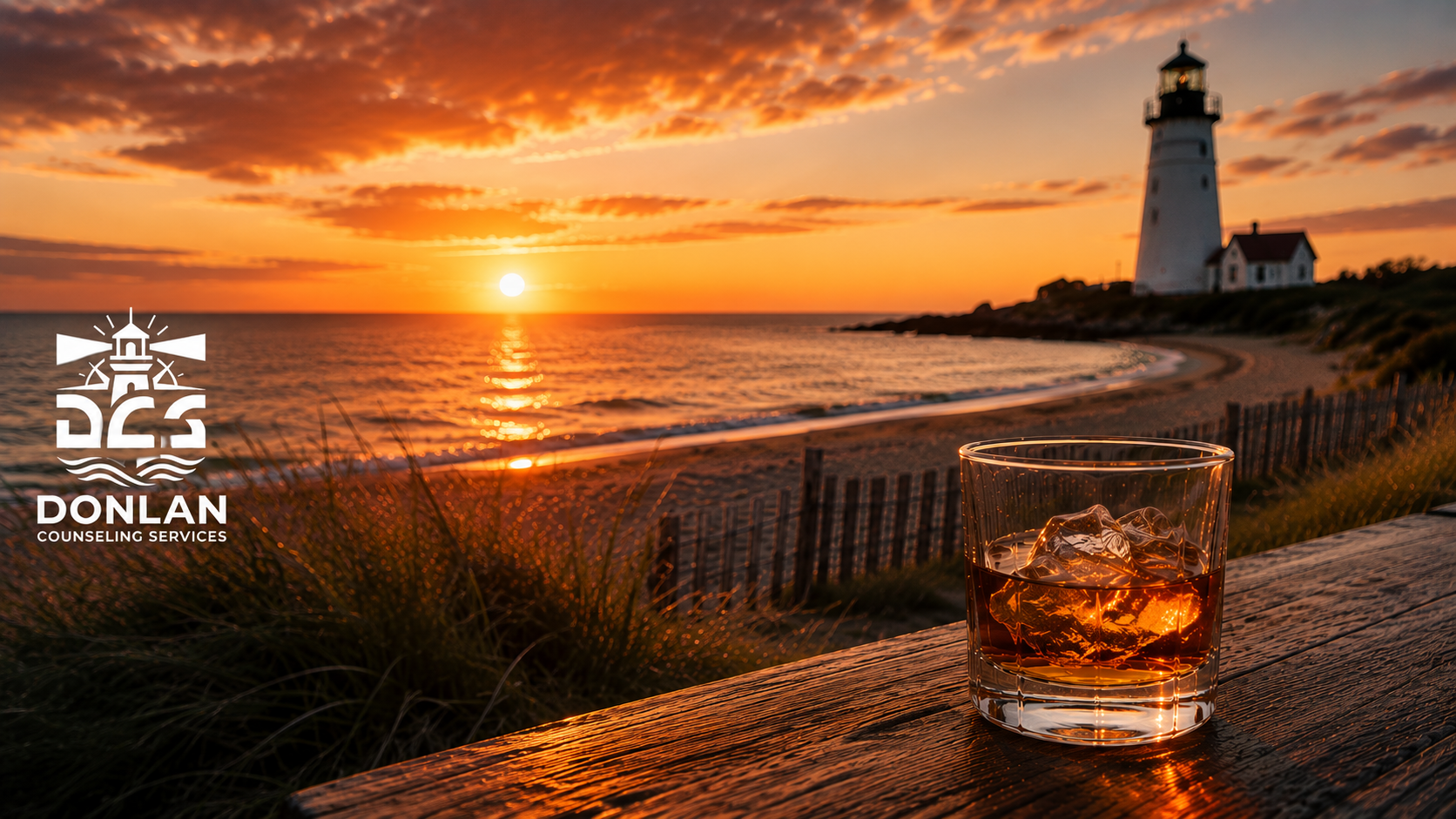
Every summer, Cape Cod comes alive.
The beaches fill. Restaurants stay packed. Vacation homes reopen. Boats crowd the harbors. Friends gather on decks, at cookouts, and around fire pits. Alongside nearly every summer ritual sits another familiar companion: alcohol.
On Cape Cod, drinking isn’t just common. It’s expected.
A cold beer after a day at the beach. Cocktails at sunset. Wine with dinner. Drinks at weddings, parties, concerts, and backyard gatherings. For many people, alcohol is so deeply embedded in summer culture that its presence barely registers.
That’s part of what makes it different from other drugs.
When someone develops a problem with cocaine, fentanyl, or other hard drugs, the warning signs often trigger concern quickly. Friends and family may notice dramatic changes in behavior, finances, health, or appearance. Labels like “addict” can appear almost immediately, often carrying significant stigma and judgment.
Alcohol rarely receives the same scrutiny.
A person can drink heavily for years while maintaining a job, raising a family, and participating in community life. In many social circles, excessive drinking is dismissed as normal, humorous, or even admirable. Stories about getting blackout drunk are often told as entertainment rather than warning signs.
Because alcohol is legal and socially accepted, many people struggle to identify when casual drinking has crossed into dependence.
Research and clinical experience suggest that people frequently live with problematic drinking for years before seeking help. Some never consider their drinking a problem because it looks similar to the behavior of people around them. If everyone is drinking heavily at social events, it becomes difficult to recognize when one person’s relationship with alcohol has become unhealthy.
Cape Cod’s seasonal culture can amplify this effect.
Summer creates an atmosphere where drinking seems tied to relaxation, celebration, and escape. Vacationers loosen routines. Happy hours stretch into evenings. Weekends blend together. What might seem excessive in January can appear perfectly ordinary in July.
Yet alcohol remains one of the most widely used and potentially harmful substances in America.
The consequences often develop gradually rather than suddenly. Relationships become strained. Anxiety and depression worsen. Physical health declines. Drinking shifts from something done for enjoyment to something needed to unwind, cope, or simply feel normal.
The challenge is that these changes often happen quietly.
Unlike many illicit drugs, alcohol can hide in plain sight. The person struggling the most may not be the one drawing attention. In fact, some of the heaviest drinkers are successful professionals, business owners, parents, and respected members of the community. Their lives may appear stable on the surface while a serious problem grows underneath.
None of this means alcohol is inherently evil, nor does it mean everyone who drinks is at risk of addiction.
It does mean we should be willing to examine alcohol with the same honesty we apply to other substances.
If society can quickly recognize the dangers of cocaine or fentanyl, perhaps it should also be willing to ask harder questions about the substance that sits at the center of so many of our social traditions.
Especially in places like Cape Cod, where summer and drinking have become almost inseparable, those conversations may be long overdue.
The most dangerous addiction is not always the most visible one. Sometimes it’s the one we’ve decided looks normal.
Dr. Matthew Donlan, DBH, MBA, LADCI | Cape Cod Addiction Specialist | Substance Use & Risk of Recidivism Evaluator
Dr. Matthew Donlan is the founder of Donlan Counseling Services on Cape Cod. With a focus on addiction and behavioral health, he works with individuals struggling with substance use, anxiety, depression, trauma, and life transitions. Through his writing and clinical work, Dr. Donlan seeks to reduce stigma, promote awareness, and encourage honest conversations about recovery and emotional well-being.