

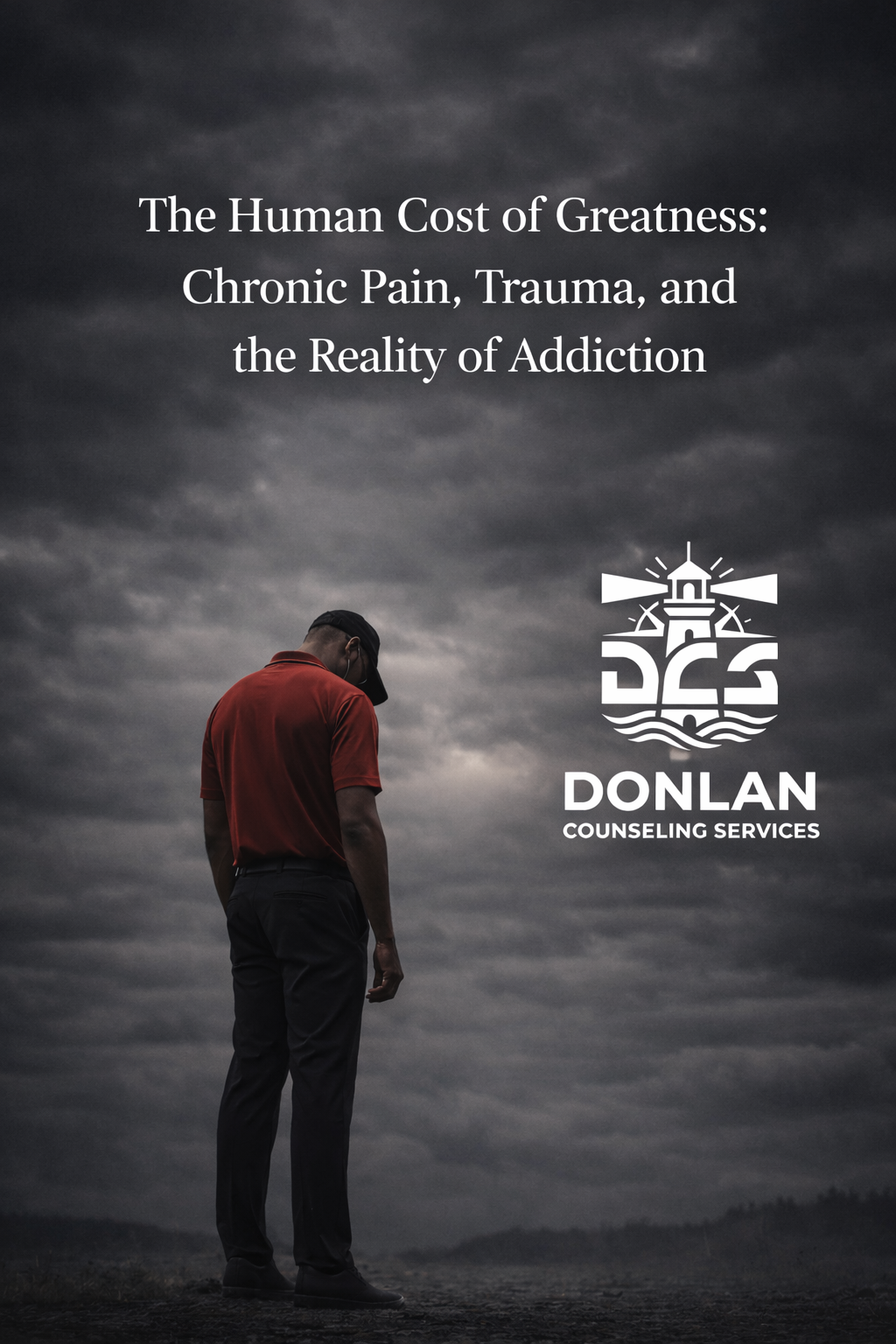
There is something ugly that happens every time a famous person falls apart in public. People rush in with opinions. They call him weak, selfish, reckless, spoiled, broken. They talk as if his money should have protected him, as if fame should have made him immune to pain, and as if talent should have somehow made him less human.
But Tiger Woods is human.
That is where this conversation has to start.
He is not a machine. He is not a logo. He is not a highlight reel. He is not just the greatest golfer who ever lived. He is a man with a body, a mind, a history, a nervous system, and real limitations — just like the rest of us. And when people forget that, judgment takes over.
The problem with judgment is that it creates distance. It lets people believe, “I would never do that,” or “He should have known better,” or “He made his bed.” But life has a way of humbling people who talk like that. Sometimes it is them. Sometimes it is their child. Sometimes it is their spouse, their brother, their mother, or their friend. Suddenly addiction is no longer some moral failure happening to “other people.” Suddenly it is in the house. Suddenly it is personal. Suddenly all that judgment feels different.
That is one reason I think people need to be very careful when they talk about Tiger Woods.
Because if you strip away the fame, what you see is a story that is not actually rare at all. You see pain. You see pressure. You see isolation. You see injury. You see sleep problems. You see medications that likely brought real relief. And then you see the consequences that can come when a person spends years trying to outrun physical pain and emotional pain at the same time.
That is not a celebrity story. That is a human story.
Part of what makes Tiger’s story so sad is that he seems to have been built for performance long before he was old enough to understand the cost of that. From a very young age, his life appears to have been organized around achievement, discipline, and domination. That kind of focus can produce greatness, and clearly it did. But it can also come with a price. When a child is shaped to perform at the highest level from the beginning, there is often very little room left for ordinary emotional development, ordinary mistakes, ordinary friendships, or ordinary freedom.
People celebrate what that kind of pressure produces. They do not always stop to think about what it takes away.
I also think it matters that Tiger’s father was not just a demanding force, but also a central anchor in his life. Tiger married Elin Nordegren in 2004, and his father Earl died in 2006, meaning some of the most formative adult years of his life were unfolding right around that loss. When someone grows up under intense pressure from one person and then loses that person, the grief can be deeply complicated. There can be love, anger, loyalty, emptiness, confusion, and relief all mixed together. That kind of emotional weight does not simply disappear because someone is rich or famous.
Then there is the isolation. It is hard for most people to imagine what it must be like to live inside that level of fame. Tiger has spent much of his life being watched, discussed, analyzed, admired, criticized, and projected onto. People want greatness from him, inspiration from him, wins from him, comebacks from him, and perfection from him. That kind of existence can trap a person inside a bubble. And when people live in a bubble long enough, secrecy becomes easier. So does escape.
Then there is the body.
Over the years, Tiger Woods has gone through a brutal injury history that includes early knee procedures, major knee damage, multiple back surgeries, serious leg trauma after the 2021 car crash, and a ruptured Achilles tendon in 2025. His first major documented surgery was in 2002, and the physical damage only kept accumulating from there. That is not ordinary wear and tear. That is years of pain layered on top of pain.
And chronic pain changes people.
It wears down patience, mood, sleep, relationships, hope, and judgment. It can make a person irritable, desperate, depressed, and mentally exhausted. It narrows life. It turns simple things — getting out of bed, focusing, resting, thinking clearly — into battles. People who have never lived with chronic pain often underestimate how relentless it is. They imagine pain as a bad moment. Chronic pain is often a bad atmosphere.
That is why the medication piece matters so much, and why it should be discussed with honesty instead of moral panic.
People get addicted to opioids and benzodiazepines for one very simple reason: they work. They work especially well in the beginning. Opioids can quiet intense physical pain. Benzodiazepines can slow panic, relax the body, and help people sleep. For someone living with major injuries, chronic pain, anxiety, or insomnia, that relief can feel like the first breath of air after being held underwater. That is the hook. Not because the person is weak. Because the medication brings real relief.
Tiger himself said in 2017 that he had been trying to manage back pain and a sleep disorder, and reports from that period tied his struggles to pain, anxiety, and sleep-related medications. In other words, insomnia was not some made-up side note. It was part of the picture. And when pain and insomnia start feeding each other, things can spiral fast.
That is another point I wish more people understood: this is not just how addiction happens to celebrities. It is how it happens to regular people every day. It happens after surgery. It happens after car accidents. It happens after sports injuries. It happens when someone cannot sleep for weeks and is desperate for rest. It happens when a medication that was prescribed for a real problem becomes something the body and brain begin to depend on. It happens quietly. It happens legally at first. It happens in good families. It happens to people who never imagined it would happen to them.
That is why judgment is so misplaced.
When people look at Tiger Woods and only see scandal, they miss the larger truth. They reinforce the stigma that addiction is simply a choice made by bad or careless people. They reduce a complex human struggle into a character flaw. And once we do that, we stop helping. We stop understanding. We stop listening. We stop seeing the disease for what it is.
I am not saying Tiger should be excused from responsibility. Nobody is helped by pretending actions do not matter. But responsibility and compassion are not opposites. A person can be accountable and still be suffering. A person can have made harmful choices and still deserve understanding. A person can be gifted, famous, and admired — and still be sick.
In fact, that is exactly the point.
The same culture that built Tiger into something larger than life is often the same culture that now punishes him for being human. We wanted him robotic when he was winning. We wanted him invincible when he was competing. We wanted him relentless when his body was breaking down. And now, when the cost of all that has become impossible to ignore, people act shocked that he has struggled.
I am not shocked.
I see a man who was shaped by enormous pressure, who endured extraordinary physical punishment, who lived under extreme scrutiny, who lost a central figure in his life, and who likely found himself trying to manage pain, sleep, stress, and identity the same way many other suffering people do: one day at a time, not always well, not always honestly, and not always safely.
That does not make him less human.
It makes him exactly that.
And maybe that is the part people need to sit with before they rush to judge him. Because the truth is, addiction does not care how talented you are, how famous you are, how disciplined you are, or how much money you have. It does not only happen to “those people.” It happens to human beings. Tiger Woods is one of them.
If we can remember that, then maybe we can talk about his struggles with a little less judgment, a little more humility, and a lot more compassion.