

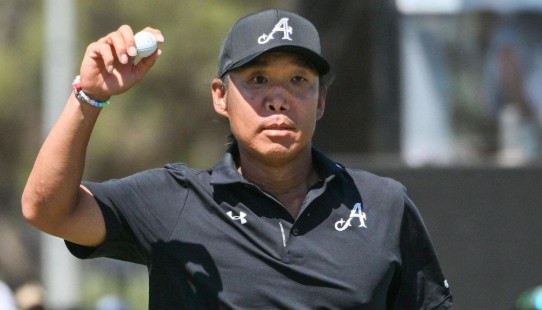
I remember sitting on my couch in 2008 watching the Ryder Cup at Valhalla. I was 34, four years in recovery, and just starting to really fall for the game of golf. My swing was a work in progress. So was I. And there was Anthony Kim — young, confident, moving down those fairways like he belonged there.
The moment I always come back to is his singles match against Sergio García. Sergio was the proven guy. The name. And Kim just beat him. Five and four. Calm, aggressive, totally self-assured. It wasn’t showy. It was conviction. He played like he trusted himself. As someone trying to rebuild confidence in my own life, that stuck with me. Watching him that week felt bigger than sports. It made boldness look possible.
At that time, I was rebuilding quietly.
In my early 20s I’d been prescribed Vicodin for pain. Over time, that prescription turned into a decade-long battle with opioid addiction. I found recovery in 2004 at 30 years old, here on Cape Cod. It wasn’t some dramatic turning point. It was daily work. Showing up. Being honest. Learning how to live again.
Golf found me in 2008. Sometimes I wish I’d started earlier, but I’m not sure it would have meant the same thing. When you’ve nearly lost yourself, standing over a golf ball feels different. The stillness. The discipline. The way the game doesn’t let you hide. Golf became part of my recovery without me setting out for it to be.
And then Anthony Kim vanished.
After the highs of 2008 — the wins, the Ryder Cup, the energy — the injuries piled up. A torn Achilles. Surgeries. Rehab. By 2012 he stepped away from competition. There were rumors about insurance money and what it would take to return. Then nothing. For years, he was simply gone.
Later we learned it wasn’t just about his body.
He was struggling with addiction. Drugs. Alcohol. Darkness that most of us never saw while he was smiling on TV. He’s been open about how deep it went. That he wasn’t okay, even when he looked like he had everything. Addiction doesn’t care how talented you are. It doesn’t care how much money you make or how loud the crowd cheers.
Recovery, though, asks for honesty.
He eventually did the work. Treatment. Support. Accountability. The unglamorous stuff. And when he came back to professional golf, he didn’t pretend it had been a simple layoff. He talked about the struggle. He owned it. That kind of transparency takes real courage, especially in a sport that doesn’t always make space for vulnerability.
We love comeback stories. We’re less comfortable with what it actually takes to come back. Admitting you were lost. Asking for help. Living with the consequences. That’s not weakness. That’s strength most people never see.
And then he proved something to himself. After more than a decade away, he came back and won the biggest event on the LIV tour. On Sunday, he shot a 9-under 63. Not a ceremonial appearance. Not a feel-good cut made. A win. Against elite players. After everything.
You don’t stumble into that.
As someone who’s built a life in recovery and now sits across from people who think they’ve missed their chance, I root for stories like his. Not because they’re dramatic. Because they’re true. People fall. People disappear for a while. And people come back.
When I think about that fist pump at Valhalla now, it looks different to me. Back then it felt like invincibility. Now it feels like the beginning of a much longer story.
I’m grateful for my recovery. Grateful I found golf when I did. Grateful for second chances. In my counseling office here on Cape Cod, I see quiet comebacks all the time. They don’t usually come with trophies or television cameras. They look more like small, steady wins. Showing up. Staying honest. Doing the work.
Sometimes, though, if you stay with it long enough, you get your own version of a final-round 63.
And that’s why I’ll always believe this: we’re not finished because we fell. We’re finished when we decide not to get back up.